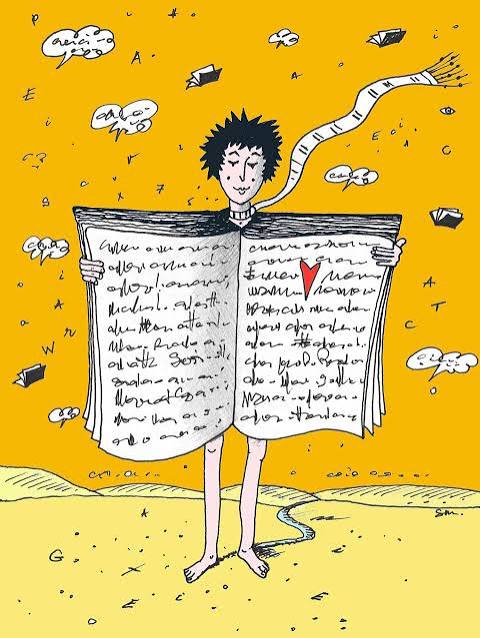
Language as Theory
“The linguistic code is a theory of the world.”
-Jonathan Culler, Literary Theory: A Very Short Introduction, 2d ed., Oxford, 2011, 60.
I keep thinking about that sentence. Literary theory has long snagged my interest. I was newly married when Jacques Derrida’s work on deconstruction became available in the U.S. in English, so I missed out on its impact on literature and philosophy while homemaking and child-raising. Recently revisiting literary theory after having studied it in college, I see that it now simply goes by “theory,” without the qualifier, because deconstruction’s project threw criticism open to a chorus of previously excluded voices. A broad range of social science disciplines subsequently widened its scope and inaugurated postmodern thought. Some call this development an explosion of theory; others, theory’s death. Yet everyone seems to agree that after deconstruction, everything changed.
Why? The short and incomplete answer is that deconstruction’s overthrow of essentialism exposed the fact that nothing lies beneath language; what is is not fully available to us. Once we accept that no essences exist, we are left to examine our different perceptions of reality and the various ways we talk about it. Language, Culler observes, is not nomenclature, a set of names for pre-existing realities. Instead, language shapes how we think. Even more, it regulates what we think. We all know the example of the many Inuit words for the single English word, “snow,” which fails to recognize the diversity of that phenomenon. Neither the Hopi understanding of time nor the Diné view of the stars finds expression in English; these concepts lie beyond the comprehension of monolinguistic English speakers because they lack the language to talk about them.
Once the full scope of language comes under the critic’s eye, we’re no longer talking about literature in the sense of specific genres with conventional features and widely accepted critical standards. Instead, we confront the very dynamics that generate thought. But what is theory, anyway?
In his Very Short Introduction, Culler suggests that we define the term by its “practical effects,” the ways theory “changes people’s views.” This approach describes theory as “the disputing of ‘common sense’” (4). We challenge common sense because surface explanations fail to account for our experience: the world doesn’t make sense—good people suffer, life isn’t fair, and senseless violence destroys the earth and the life it supports. If we hope to alter these realities, we must first try to understand. Literary theory offers tools for understanding because it recognizes language as fundamental to how we think and choose to act.
The linguistic code is a theory of the world. I decided to test Culler’s claim on my July reading. If contemporary English is a theory, then we can examine its various uses to understand how they interpret the world. Two novels and two poetry collections from my July reading illustrate the point.
Judy Dearborn Nill’s new novel, Reluctant Spring (Independently published, 2026) relies for its coherence on the inner dialogue of Emma, her protagonist. Although the novel is written in third person, its leading character’s self-talk reveals her motivation and drives the novel’s plot. This device works because Nill crafts a credible and contemporary voice for her main character. Emma’s narration of her emotional dilemmas and mental processes unveils a three-dimensional personality facing genuine challenges to her identity. Nill places readers inside her protagonist’s mind, not so much by what she says, but by how she says it. She depicts Emma as a real person, not an abstract psychological phenomenon. Nill uses humor, self-deprecation, and idiomatic expressions to situate her heroine in a particular place and time. We believe her. Each chapter spills urgently into the next, building suspense about Emma’s deliberations and signaling the significance of the outcome.
Oscar Hokeah’s Calling for a Blanket Dance (Algonquin Books, 2022) takes the opposite tack. While Nill’s story unfolds inside a single character, Hokeah’s narrative unfurls a multiplicity of voices with distinctive idiolects to match their various perspectives. His many speakers relate their stories in a fictional chronology, inviting readers to fill the gaps in space and time by connecting what they remember and anticipating future developments. Hokeah recruits readers as storytellers by inviting them to piece together the larger scenario that encompasses the poverty and violence pervading the lives of immigrants and displaced Native persons. He organizes his plot around a quilt whose overall design emerges only when all the pieces are in place. This ingenious plot device enriches his “multivocal” technique with a vivid image of beauty and comfort.
In a similar way, we can contrast recent works by two poets, Paul Juhasz and Jake Skeets. Katabasis (Juhasz, Turning Plow, 2026) chronicles a descent that precedes and follows a suicide attempt. Juhasz’s poems detail tragedies and incongruities of contemporary life that tempt dejection and despair. Horses (Skeets, Milkweed Editions, 2026) depicts environmental collapse, centered around the image of a herd of wild horses found dead in 2018 in a dried-up stock pond on the Navajo Nation. (Stay tuned here or subscribe to my Substack for my forthcoming reviews of both books.)
These poets approach their subjects differently. Juhasz employs sentence syntax and philosophical style in an effort to make sense of nonsensical experience. His dense, muscular lines test language’s power to wrest meaning from meaninglessness. By contrast, Skeets writes in the register of ordinary speech with short, airy lines and spare punctuation. Skeets allows his fractured syntax to mirror damage inflicted on the land.
Neither poet depends solely on semantic meaning to make his point. Although few readers can be expected to know the meanings of catadromous, cicatricose or endorheic, Juhasz’s numinous vocabulary signals his reach across language’s extensive resources in hope of finding a sense of purpose. Skeets builds lines that leave important words out entirely: When we get to the. When we get (“Field Song”). His broken phrases exhibit the splintered world he laments. But both poets acknowledge the crucial role language plays in their responses to existential threat.
So, how do these authors interpret the world using our linguistic code? In Nill’s Reluctant Spring, Emma ultimately exits her problematic relationships and finds the courage to trust her decisions. Emma’s emerging autonomy relies on Nill’s supply of realistic psychological detail. The novel suggests that introspection and self-trust liberate individuals from life’s toxic entanglements. Hokeah’s Calling for a Blanket Dance finds healing and hope only in the embrace of injuries inflicted by an unjust society. Wholeness begins with his protagonist’s acceptance of a broken world and his reintegration with his extended family, despite its problems. Whereas Nill celebrates self-determination, Hokeah upholds the necessity of community, even in its wounded state.
It’s hard to imagine two more dissimilar poetry collections than Katabasis and Horses, yet both Juhasz and Skeets exhibit profound confidence in language in the face of disaster. Having exhausted language’s ability to pry a sense of purpose from a life’s experience, Juhasz ultimately turns to his reader for solace. Know … that you are not the first to stumble/into this dark, he writes. And know that you will not be the last, either./I will wait for the others as I waited for you, he promises in his title poem. He concludes that the companionship of others is worth living for. Language furnishes the means and mode of his connection to other searchers.
Skeets’ orientation to the land recognizes language as a physical component of the landscape. Language consists of human breath, like the wind’s movement that shapes the land’s contours. Skeets integrates voice and land through speech, confident that the land hears and answers his words. [T]he desert is a love letter, he writes in “Kéyah : Saad.” Together, speaker and land dream of water. Skeets asserts that humankind and the land stand and fall together in their quest for survival.
However we define it, literature shapes the contemporary scene, offering tools to understand literary classics and the full scope of human activity. Our writing matters. In a podcast last year for the New York Review of Books, novelist and immigration activist Héctor Tobar describes our world’s current climate of oppression and injustice as a “crisis of poetry.” More than any policy or program, he argues, we need poetry that offers new metaphors for justice and stories that inspire action for the common good. Language makes credible and accessible the hope we need to survive, and the courage to act on that hope in solidarity with others. If the linguistic code is a theory of the world, then our words can change things by creating visions of what we and our world can become.