Poet. Scholar. Artist.
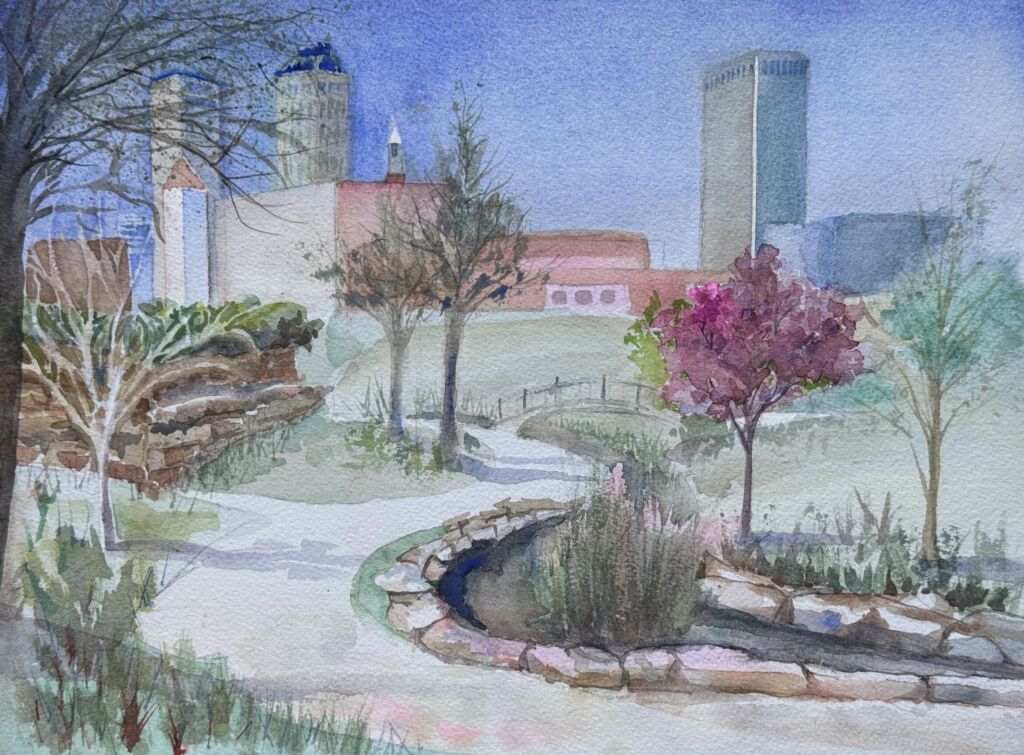
Margaret Lee is a poet, scholar, watercolor sketcher, fiber artist, and aspiring naturalist in Tulsa, Oklahoma. She finds her subjects in the prairies of Oklahoma, deserts and mountains of northern New Mexico, rocky shores of the Oregon coast, and the wild terrain of inner landscapes.
RELEASED JAN. 9TH 2026
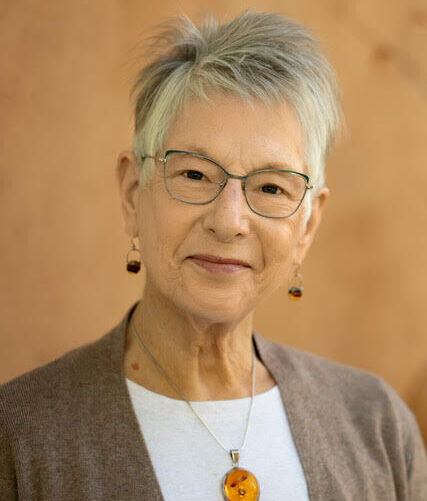
Sappho Prompts
From publisher, Finishing Line Press. A poetic conversation across miles and millennia, Sappho Prompts engages an ancient voice in contemporary poems of life and love. Margaret Lee’s collection responds to ancient Greek fragments of Sappho, known in antiquity as The Poetess. Using Sappho’s fragmentary lines as prompts Lee’s poems reflect the myths, desires, and longings that characterize Sappho’s ancient songs. Sappho Prompts features Lee’s translations of Sappho from the Greek with extensive notes, cover art by the author, and an explanatory essay explaining Sappho’s context in ancient literature and her enduring influence.
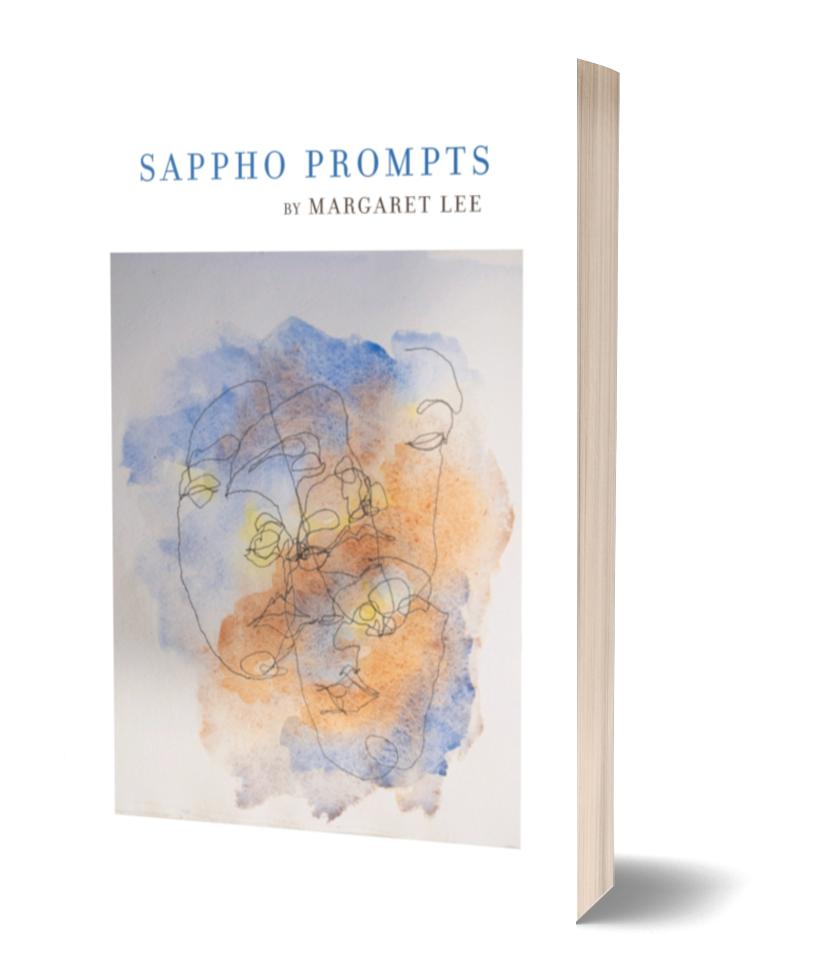
Collections
My Musings
Into the Hush: A Review
Praise for Margaret's Poetry
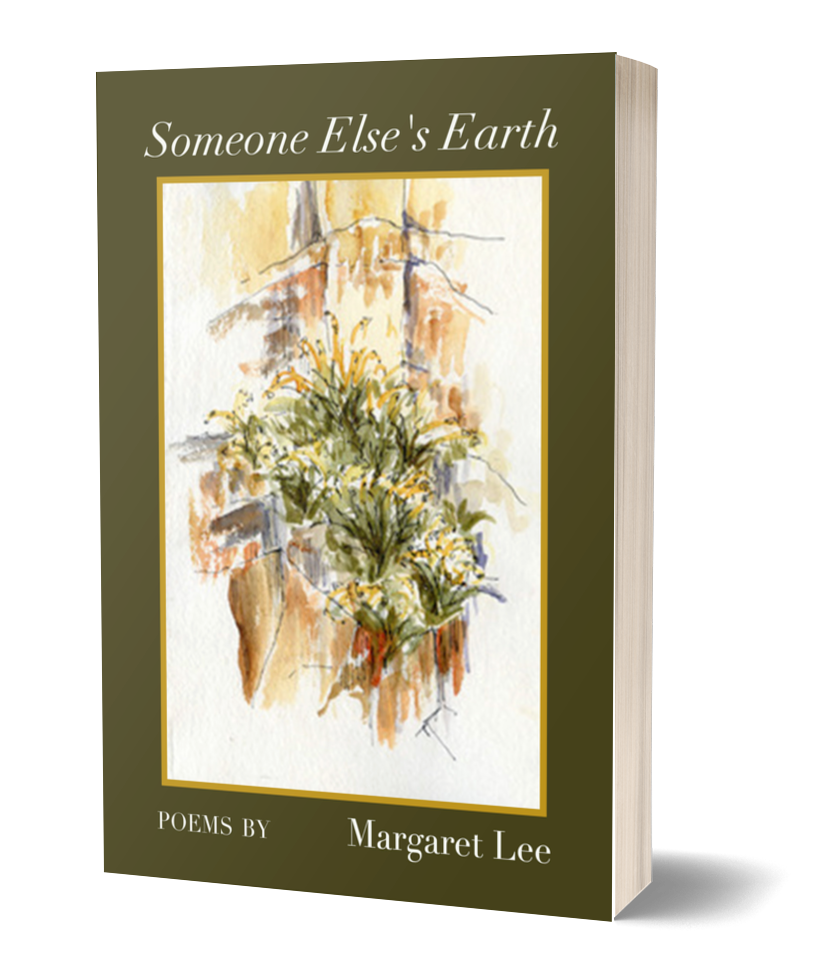
“Supremely inventive, exact, and shivery in its timely connection to the language of an ancient civilization, Margaret Lee’s Someone Else’s Earth takes us to a place and time we have never belonged yet have always belonged; to the beginnings of lyric expression and the telescoping in and out of the world of isolated despair. Reading this intricate and deeply moving series of poems as human existence is threatened to be erased, Someone Else’s Earth is constructed of bits and pieces of what remains of Sappho’s verse, almost as sherds of pottery being fit back together. Keep this book by your bed, under your pillow, within easy reach. Someone Else’s Earth awakens the Possible for everyone in every time.”

Susan K Anderson
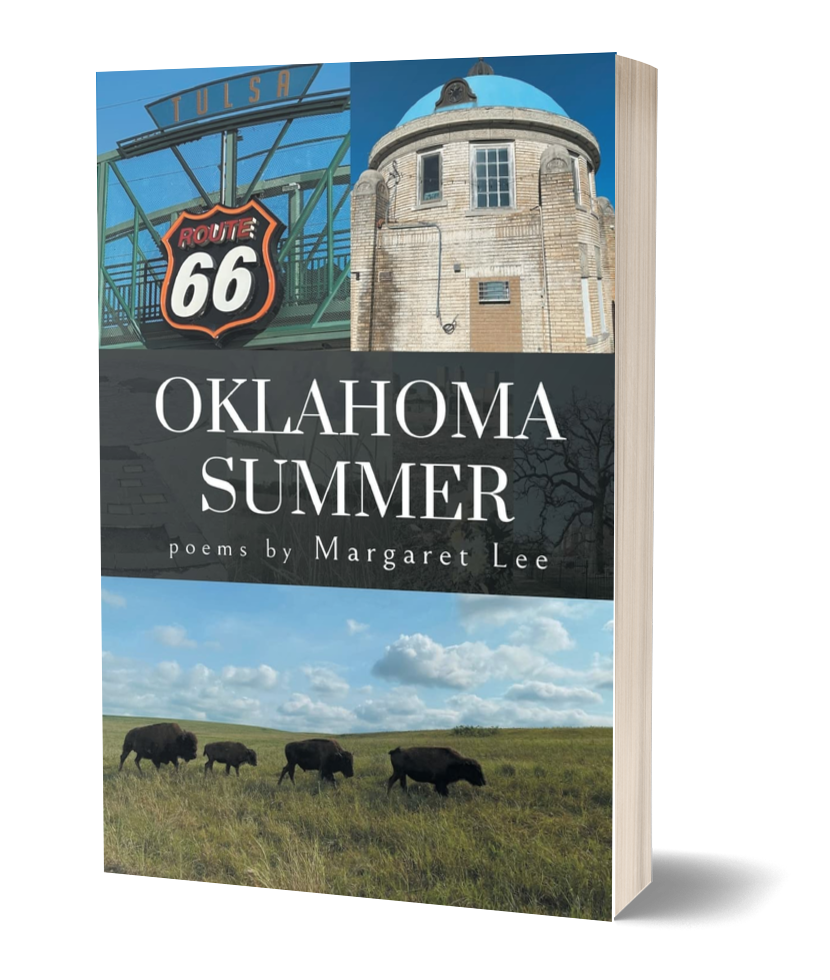
“Oklahoma Summer begins in the bounty and abundance of a prairie riotous with flowers and ends with an acorn falling to earth. In the space between the first and last poem, it studies the tangled history of a contested territory. Nature poems give way to an Atlas Obscura-type inventory of the curious human spaces of Tulsa. These poems, in turn, lead us into a documentary project that catalogues a history of stolen land, broken treatises, and racial violence. In these poems, Margaret Lee speaks in a prophetic voice similar to that of Isaiah. Her vineyard song gives way to an indictment of how this nation of European colonizers has joined house to house and field to field to wrest land and goods from rightful owners. But Lee is too good a poet, too good a student of history, to write political poems that do not also engage in self-scrutiny. In these poems, she shows us how to write a poetry of place attuned to both the present and the past.”

Jeremy Paden
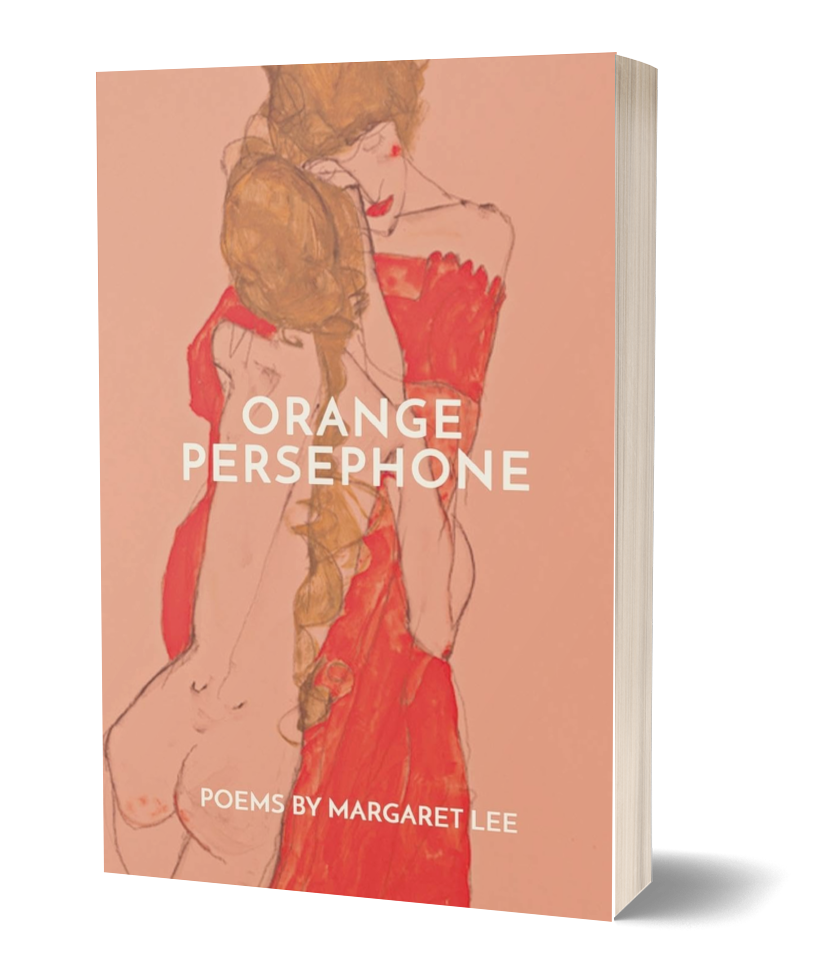
“Margaret Lee has a gift for melding inner and outer worlds with sensibility and sensitivity. Her daughter, “Orange Persephone,” is an “unabashed/brave bloom,” yet tragedy strikes the daughter’s and, hence, the mother’s life. Lee enters that pain with grace and abandon, taking us on a journey to survey the constellations and the depths of the ocean, carried by the waves. In “Unraveled,” the poet cries out, “I am a garment soon to be cut from the loom.” Yet it is the beauty of the poet’s words and the precious silence between words that lingers, reminding us that beauty exists in even the barest moments of our lives.”

Caroline Cottam
“I took my grief to the sea,” Margaret Lee tells us in Orange Persephone, “Grey grief, a thousand deaths… and the waves pounded against the cliff… and the waves crashed against the black basalt.” Lee’s passionate yet masterfully restrained expression of the divine feminine –– mother, daughter –– within the music of embodiment and by way of a contemporary woman’s experience of devotion and loss, is utterly transporting: “The night silence, its acid/edge, never again quiet.”

Sawnie Morris
“Margaret Lee’s Oklahoma Summer blooms with butterfly weed, primrose, bird calls, and the currents of tallgrass prairie. It is a complicated pastoral in remembrance for what must not be forgotten-the wounds of drought, excavation of mass graves from the Tulsa Race Massacre, and displacement of the Muskogee. Her poems beautifully toil beyond boom and bust to plant what ignites imagination and memory.”

Juan J. Morales
“Margaret Lee’s Orange Persephone is a fusion of woeful utterance and gripping expression; intensely felt, attentive, and self-questioning in its grief.”